

Sysco leads fragmented food supply for restaurants market
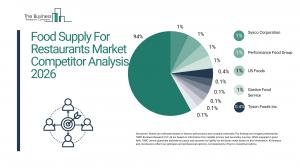
The food supply for restaurants market remains highly fragmented, with the top 10 players accounting for just 6% of revenue in 2024, according to The Business Research Company. The report highlights Sysco’s lead, the rise of B2B procurement tools, and strategies companies are using to defend share as restaurant operators push for lower costs, faster delivery and more reliable sourcing.
Why it matters: - Restaurant supply chains are still split across many distributors, wholesalers and specialized providers. - The market’s low concentration leaves room for regional players, digital procurement platforms and new sourcing models to take share. - Operators are prioritizing product consistency, food safety, cost control and delivery reliability.
What happened: - The Business Research Company said Sysco Corporation led global sales in 2024 with a 1% market share. - The company said the food supply for restaurants market is dominated by global foodservice distributors, regional food suppliers, wholesale distributors and specialized providers of fresh produce, packaged foods and culinary solutions. - The report listed Sysco, Performance Food Group, US Foods, Gordon Food Service and Tyson Foods among the leading companies. - The report also identified McDonald’s, Starbucks, Yum! Brands, Restaurant Brands International, Domino’s Pizza and Subway among major end users.
The details: - The top 10 players accounted for 6% of total market revenue in 2024. - The report said that concentration reflects low to moderate entry barriers tied to sourcing networks, logistics infrastructure, supplier relationships and inventory management systems. - Sysco’s broadline distribution business covers fresh produce, meat, seafood, frozen foods and packaged ingredients. - The company’s portfolio supports menu diversity, supply reliability, cost management and operational efficiency across independent and chain restaurants. - Leading companies also included Bidfood, The Chefs’ Warehouse, Shamrock Foods Company, Reinhart Foodservice and Brakes Foodservice. - The report said major raw material suppliers include Cargill, Archer Daniels Midland, Bunge Limited, Louis Dreyfus Company, Olam Group, Wilmar International, JBS S.A., Marfrig Global Foods, BRF S.A., Hormel Foods, Smithfield Foods, Tyson Fresh Meats, Pilgrim’s Pride, Chiquita Brands International, Dole plc, Fresh Del Monte Produce, Cal-Maine Foods, Land’O’Lakes, Fonterra and Saputo Inc. - Major wholesalers and distributors named in the report include Restaurant Depot, What Chefs Want, Hyperpure, BlueCart Inc., Collectiv Food, Surya Foods, Pentagon Food Group, Total Foodservice Solutions Ltd, Regency Foods Ltd and CHEF’STO RE. - The report said companies are focusing on supply chain optimization, cold chain logistics, digital procurement platforms, private-label expansion and sustainable sourcing. - The report listed AI-powered demand forecasting, sustainable packaging, supply chain diversification and direct-to-restaurant procurement platforms as key strategies. - The source included a sample request link for the report: Request a free sample. - The source also included the full report link: Access the detailed market report.
Between the lines: - The market data points to a business where scale still matters, but no single player has close to majority control. - The rise of digital procurement tools suggests restaurant buying is shifting toward more transparent, data-driven and automated workflows. - Swiggy launched Swiggy Assure in March 2025 as a B2B supply chain management app for restaurants, with a digital platform, curated supplier ecosystem and real-time inventory tracking. - The app’s ordering interface, inventory visibility and automated procurement workflows are aimed at improving operational efficiency and supply chain transparency.
What’s next: - The report expects service expansion, digital ordering capabilities and supplier partnerships to strengthen competitive positioning. - Companies are likely to keep investing in AI forecasting, packaging sustainability and supply chain diversification as raw material volatility continues. - The Business Research Company said its 2026 reports add market attractiveness scoring, TAM analysis, company scoring matrices, forecasting dashboards, hotspot infographics and updated trend analysis.
The bottom line: - Restaurant food supply remains a crowded, logistics-heavy market where the winners are likely to be the companies that combine scale, speed, digital tools and resilient sourcing.
Disclaimer: This article was produced by AGP Wire with the assistance of artificial intelligence based on original source content and has been refined to improve clarity, structure, and readability. This content is provided on an “as is” basis. While care has been taken in its preparation, it may contain inaccuracies or omissions, and readers should consult the original source and independently verify key information where appropriate. This content is for informational purposes only and does not constitute legal, financial, investment, or other professional advice.
Sign up for:
Food & Beverage Europe!
The daily local news briefing you can trust. Every day. Subscribe now.
Check Your Email!
We sent a one-time activation link to: .
Confirm it's you by clicking the email link.
If the email is not in your inbox, check spam or try again.
Welcome back!
is already signed up. Check your inbox for updates.